
Compare Florida pool builders before you sign
1272 pool contractors across 125 Florida cities, each matched against the state license file, with exactly what they build confirmed from their own websites. Free, no sign-up, no sales calls.
- Every builder checked against the Florida DBPR license file
- Service details confirmed on each builder’s own website
- Compare before you buy
Featured Florida pool builders
SponsoredThe featured spot here is open — one business only. The State Page Featured Placement: the most-viewed page on the site.
Put your company at the top for all of FloridaPool builders by city
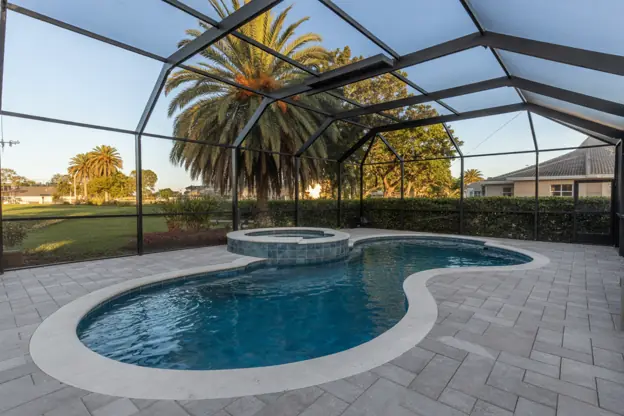
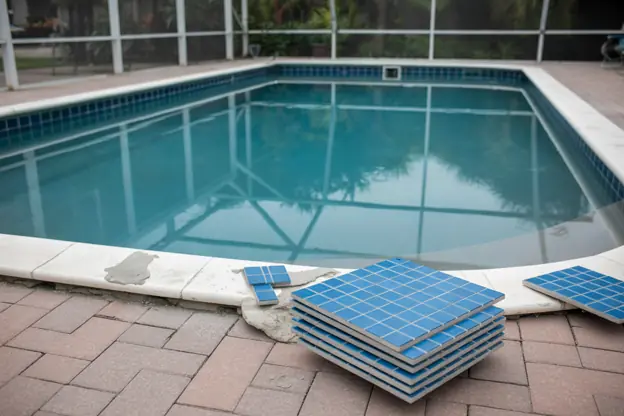
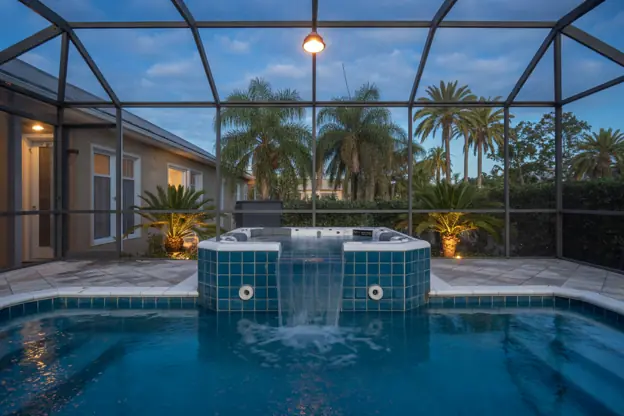
Pick your part of Florida. Every city page lists the builders based there, which ones hold an active state pool license, and what each one builds.


What do you want built?
What we check before a builder is listed here
The state license file
Florida licenses pool contractors statewide. We match every business against the Department of Business and Professional Regulation’s license file and show the license number, class (CPC certified or RP registered), first-issue date and whether the Construction Industry Licensing Board has disciplined it in the last five years.
The builder’s own website
We read each site and record sixteen yes-or-no facts — new pools, remodels, spas, gunite, fiberglass, outdoor living, financing, warranty and more. If the site doesn’t say, we say “not confirmed”.
Nothing else
No star ratings copied from other sites, no paid positions in the list, no AI-generated project photos. Sponsored cards sit in a labeled band, and the list order never changes for money.
Records last checked November 2, 2026. Read the full method.
Every Florida city with pool builders
Before you hire a Florida pool builder
Sunshine Pool Guide is a directory of swimming pool builders, remodelers and resurfacing contractors in Florida, published by Local Guide Press. Every listing is pulled from public records and checked against the builder's own website and the state licence file. Nothing here is a review, and no builder pays to be listed or ranked. I'm Jenna Payne, the research editor, and my job is to show what I could confirm and say plainly what I could not.
Florida is different from most states in one way that matters: pool contractors are licensed by the state. The Department of Business and Professional Regulation (DBPR) licenses them under Chapter 489 of the Florida Statutes, and building a pool for pay without that licence is a crime. So the licence check is the first filter on this site, before anything else. Every profile I could match to an active licence shows the CPC or RP number and the date I matched it. Use the city pages to find builders who work in your area, then open a listing to see what was confirmed. If a listing is wrong, email editor@localguidepress.com and I'll fix it, usually within five business days.
Licensing in Florida: CPC, RP and what each may do
Florida licenses swimming pool contractors statewide under Chapter 489, Part I, administered by DBPR and the Construction Industry Licensing Board. Section 489.105 defines three pool categories: commercial pool/spa, residential pool/spa and swimming pool/spa servicing. A Certified Pool/Spa Contractor holds a number starting with CPC and may work anywhere in the state. A Registered Pool/Spa Contractor holds an RP number, qualified through a county or city competency licence, and under section 489.117 may work only where that local licence is held. DBPR adds a subcode: A commercial, B residential, C servicing. A servicing contractor may repair and resurface pools but may not build one, so a new pool needs A or B. SCC and RX numbers are specialty contractors; the pool specialties (layout, structural, excavation, finishes) may contract only with licensed pool contractors, not with you. Verify any number in the free DBPR licence search, which shows the licensee, the qualified business, the status and the expiry date. Licensed contractors are backed by the Homeowners' Construction Recovery Fund, which pays nothing on unlicensed work. Complaints go to DBPR's complaint page; under section 489.129 the board can fine, order restitution, suspend or revoke, but it does not settle contract disputes.
What the listing labels mean
Each listing shows a small set of labels. They are facts with dates, not endorsements. State-licensed · CPC/RP # means I matched the business to an active pool contractor licence in DBPR's public licence file on the date shown, and the number printed is the one in that file. License not verified means I could not make that match. It is not an accusation. Florida companies contract through a qualifying agent under section 489.119, and many trade names differ from the licensed entity, so a real licence may sit under an individual's name or another company. Ask the builder for the number and check it yourself in the DBPR search. Details confirmed means I read the builder's own website on the date shown and the service facts, such as gunite, fiberglass, remodels or service areas, are the builder's own statements, not mine. Verified by the business means someone at the company confirmed the listing from a company email address. Premium marks a paid enhanced profile; it never changes a builder's place in the list, and the order is the same whether or not anyone pays. Anything in a band marked Sponsored is paid placement and is labelled as such. There are no star ratings anywhere on this site, and I do not copy them from other platforms.
Gunite, fiberglass or vinyl in Florida's water table and sand
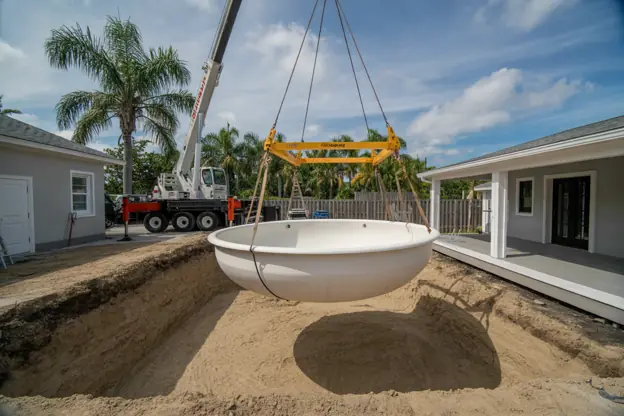
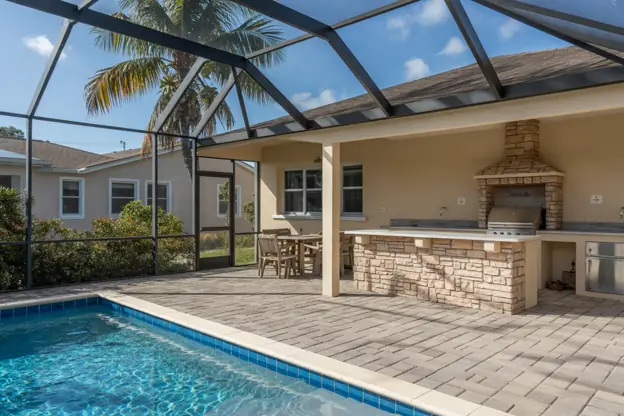
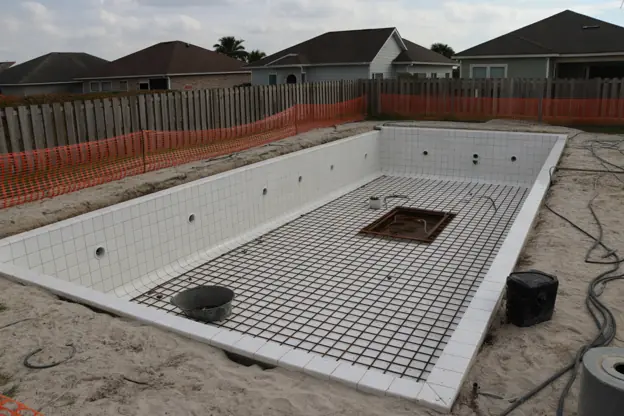
In Florida the ground decides more than style does. Much of the state is sand over limestone with a water table a few feet down, higher still after the rainy season. Builders dewater with well points or a sump pump while the shell goes in. The physics are blunt: a full pool outweighs the groundwater pushing up on it, an empty one does not, and a drained shell can lift and crack the deck; AQUA Magazine's piece on hydrostatic pressure explains why. Gunite and shotcrete are the common choice here. They take any shape, and a reinforced shell with a hydrostatic relief valve in the main drain handles the groundwater. Fiberglass installs fast and has a smooth surface, but shape is fixed by the mould and the crane, and an empty fiberglass shell is the one most likely to float, which is why Orange County asks fiberglass installers for an engineered hydrostatic method. Vinyl liners are uncommon here because sun, heat and twelve-month use shorten liner life. Salt systems are the default on new builds and attack some stone coping and aluminium cage fasteners; pebble and quartz finishes outlast plain plaster under this sun. Most new Florida pools get a screen enclosure, which keeps out bugs and pollen, gives shade and can double as the safety barrier.
Permits and the barrier law
Every inground pool in Florida needs a building permit under section 553.79, and every county I checked, from Miami-Dade to Jacksonville, adds electrical and gas sub-permits. The contractor normally pulls the permit; the contract should say so. Before the first inspection a Notice of Commencement must be recorded with the county clerk under section 713.13 and filed with the building department under section 713.135 on any contract over $5,000. Inspections run footing, steel with bonding, deck, barrier and electrical before filling, then final, as Lee County's guide shows. Chapter 515, the Residential Swimming Pool Safety Act, says a new pool deeper than 24 inches cannot pass final inspection without one of five features in section 515.27: a 48-inch barrier meeting section 515.29, an approved safety cover, exit alarms on doors and windows to the pool, self-closing and self-latching doors, or a pool alarm. A screen enclosure counts as the barrier when its doors self-close and self-latch, but a cage on the house does not isolate the pool from it, so the house doors still need an alarm or latch. Drain covers must meet the federal Virginia Graeme Baker standard. An HOA review under section 720.3035 comes before the permit; get it in writing.
How to compare bids and what the contract must say
Get three written bids for the same design, each as a base price with a separate options list, so the totals line up. Each bid should name the shell type, size and depth, the finish, tile and deck with square footage, the equipment by brand and model, the enclosure and who builds it, and who pulls the permit. Florida requires three things in the contract. Section 489.1425 requires every residential construction contract over $2,500 to carry the Homeowners' Construction Recovery Fund notice in the statutory wording. Section 713.015 requires the lien law warning in 12-point bold capitals on the front page or a page you sign. And section 515.33 requires the builder to give you a pool safety law summary. Deposits are uncapped, but section 489.126 says a contractor who takes more than 10 percent up front must apply for the permit within 30 days and start within 90 days of its issue, or face a criminal charge after your written demand. Tie every payment to a visible milestone, with the last one after the county's final inspection, and take a lien waiver on the section 713.20 form from the builder and major subcontractors with each payment. Florida requires no particular warranty, so get the shell, finish, equipment and enclosure terms in writing; groundwater and flotation are the usual exclusions.
Timeline and the best time to build in Florida
Permits come first. Section 553.792 gives a local government 30 business days to act on a complete residential application, but a flood-zone lot, a busy spring or an incomplete package pushes past that, and after the 2022 and 2024 storms Southwest Florida builders reported long backlogs that I cannot say have cleared. A gunite pool then moves through excavation and dewatering, steel, shotcrete, tile, deck, enclosure, plaster and start-up, with curing and inspections between. Fiberglass sets in days once the shell arrives, but the factory order adds weeks of lead time. Weather sets the calendar. Summer brings afternoon thunderstorms that stop crews daily, and Florida leads the nation in lightning, as the Division of Emergency Management notes, which halts outdoor work on its own. The Atlantic hurricane season runs June 1 through November 30; builders pause shotcrete when a storm is forecast, and a landfall diverts screen crews to repairs for months. The water table peaks at the end of the rainy season, so a late-summer dig on a low lot is the wettest of the year. The dry season, late October to May, is the window most builders prefer; a fall start is usually swimming by spring. Ask for a written schedule with milestones and a separate date for the cage, which is often on another company's calendar.
What I check and what I cannot
I check each listed business against DBPR's public licence file and record the CPC or RP number and the date when I find an active match. The match is by business name and, where I can find it, the qualifying agent's name, and that method has limits. A licence held under an individual's name, a parent company or a trade name I did not see will show as License not verified even when the builder is properly licensed, and the file I match against is a snapshot, so a licence can lapse or be reinstated after my date. The DBPR search is the live source and takes a minute. I read each builder's website so the service details are its own statements, and I record that date too. I do not visit job sites, speak to customers or verify workmanship, and I cannot tell you whether a builder will finish on time. Prices are deliberately absent because they go stale fast and vary by yard, county and water table. When a fact depends on a rule that can change, such as a statute section or a county checklist, I date it and link the primary source. If you find an error, email editor@localguidepress.com. Corrections are posted with the date they were made.
Florida pool questions, answered
How much does it cost to build a pool in Florida?
This directory does not publish price tables. Pool pricing in Florida moves with material costs, labor demand, the county and the yard, so any single number would go stale fast. What the editor can say is what sets the price. The shell type (gunite, fiberglass or vinyl) sets the base. Size and depth add excavation, steel and finish. Interior finish, tile, paver or concrete decking, equipment and water features each add a line. Florida adds items that buyers from other states do not expect: a screen enclosure, which most new pools here get; a heater or heat pump for the cooler months; and dewatering, because the water table in much of the state sits close to the surface and the hole must be pumped dry while the shell is built. Coastal and flood-zone lots can need extra engineering. The clearest way to learn current pricing is to collect three written bids for the same design in the same month.
What size pool is right for a Florida backyard or a family?
Most Florida backyard pools fall between a small plunge pool and a 20 by 40 foot family pool, and many are smaller than pools in states with bigger lots. Bigger pools cost more to build, heat, fill and chemically treat, because every cost scales with surface area and volume, and in Florida the screen enclosure scales with the deck around it. Many families find that a pool in the 12 by 24 to 15 by 30 range gives room to swim and play without taking the whole yard. A 20 by 40 pool suits lap swimming or large groups but needs a large lot and a large cage. Setbacks limit the footprint; counties and cities set their own numbers, and lakefront and canal lots often carry extra setbacks from the water. This directory does not quote prices by size. A builder can lay out options on a survey before any price is set.
How long should a pool pump run in Florida, and what does the electricity cost?
The pump is the main electrical load on a residential pool. A single-speed pump running long hours in a Florida summer uses far more energy than a variable-speed pump turning the same water over at low speed, and the Florida Building Code's energy provisions now steer new pools toward variable-speed equipment. Pumps do not need to run all day. The goal is to filter the full pool volume at least once daily, which most owners reach with longer summer and shorter winter run times. For scale, FPL's residential rate card effective October 2026 lists a base energy charge of 7.865 cents per kWh for the first 1,000 kWh plus a fuel charge of 2.893 cents per kWh and smaller riders, and Tampa Electric's January 2026 insert lists 9.569 cents energy plus 3.210 cents fuel for the first 1,000 kWh. Usage above 1,000 kWh is billed at a higher tier with both utilities, and a pool pump can push a household over that line. The editor does not estimate a pool's monthly cost here because run time, pump size and tier vary by home. A builder or service company can set a schedule for a specific pump.
Does a pool add value to a home in Florida?
This directory does not publish value statistics, and the editor has not found a reliable Florida-wide figure. What is known is that pools are common in most Florida metro areas, so a pool rarely puts off local buyers the way it might in a colder state, and in some neighborhoods buyers expect one. A pool almost never returns its full construction cost at sale. Condition matters more than presence. A clean pool with current equipment, a sound screen enclosure and a compliant barrier is a selling point. A stained, leaking or unscreened pool, or a cage with corroded fasteners and torn panels, is a negotiation item. Florida sellers must disclose known material defects that are not readily observable, and a leaking shell or a failed heater is the kind of thing that comes up at inspection. Anyone planning a pool for resale alone should talk to a local agent first; anyone planning one to swim in should build the one they will use.
Does adding a pool increase property taxes in Florida?
Usually yes. Florida's Save Our Homes cap, in section 193.155 of the Florida Statutes, limits the yearly increase in a homestead's assessed value to the lower of 3 percent or the change in the consumer price index. But subsection (4) says changes, additions or improvements to homestead property are assessed at just value as of the first January 1 after they are substantially completed. A new pool is such an improvement, so its market value is added on top of the cap in that first year, and the Hillsborough County Property Appraiser explains that the added value then rides under the cap in later years. How much the assessment rises depends on the appraiser's method and the pool's size, enclosure and features. Homeowners do not stop paying property tax at 65 in Florida; section 196.075 lets a county or city offer an additional exemption to residents 65 and older whose household income falls under an indexed limit, and a separate exemption for long-term residents of low-value homes. This directory does not rank counties by tax rate. The county property appraiser can estimate the change for a specific home.
Does a pool raise homeowners insurance in Florida?
Usually yes, though the amount varies by insurer, and in Florida the pool is a small line next to the wind and roof questions that drive premiums. A pool adds liability exposure, so carriers often recommend or require higher liability limits and may ask about the barrier, a diving board or a slide. Some insurers require a compliant fence or screen enclosure and self-latching gate before covering a pool at all. The pool structure itself is often covered as an "other structure" with its own limit, which can be too low for a replacement, and the screen enclosure is the part most often damaged in a hurricane. Many Florida policies limit or exclude screen enclosure coverage unless it is added by endorsement, and wind claims carry a separate hurricane deductible. This directory cannot quote premiums. Homeowners should call their agent before construction starts, ask what the policy requires for the barrier, and ask specifically how the cage is covered. The other-structures limit should be updated once the pool is finished.
Can a swimming pool be written off on taxes?
This directory does not give tax advice. In general, a residential pool is a personal expense and is not deductible. IRS Publication 502 allows some capital improvements as medical expenses when their main purpose is medical care for the taxpayer, a spouse or a dependent, and even then only the part of the cost that exceeds any increase in the home's value counts, and only medical expenses above 7.5 percent of adjusted gross income are deductible. The publication does not name swimming pools, and a doctor's note alone does not make a pool qualify. A pool does count as a capital improvement that raises the home's cost basis, which can matter at sale. Florida has no state income tax, so the question is federal only. The editor did not research senior income-tax deductions for this directory, since they have nothing to do with pools. Property tax is a separate matter handled by the county property appraiser. For any of these questions, a licensed tax professional should review the specific facts.
Is a pool worth it in Florida, and what are the alternatives?
That is a personal decision this directory cannot make. The case for a pool in Florida is stronger than almost anywhere else in the country: a swim season that runs from March into November unheated in most of the state, and year-round with a heat pump. The costs are ongoing: electricity for the pump, chemicals that burn off fast in sun, water to replace evaporation, periodic resurfacing, screen re-screening after storms and equipment replacement. There are responsibilities too. Chapter 515 of the Florida Statutes requires a safety feature on every new pool because drowning is the leading cause of unintentional death for Florida children ages 1 to 4, insurance may rise, and summer water can get too warm to refresh without shade. Alternatives include a spool or plunge pool on a small lot, a cocktail pool under an existing lanai, a community pool membership, or a screened patio with fans. Homeowners who swim often and keep up maintenance tend to be happy. Those who want the look without the use often find it a chore.
Do pool contractors need to be licensed in Florida, and how do they get the license?
Yes. Florida licenses swimming pool contractors statewide under Chapter 489, Part I, of the Florida Statutes, administered by the Department of Business and Professional Regulation (DBPR) and the Construction Industry Licensing Board. Section 489.105 defines three pool categories: commercial pool/spa contractor, residential pool/spa contractor and swimming pool/spa servicing contractor. Building, repairing or servicing a pool for compensation without one of these licenses is unlicensed contracting under section 489.127. The crew does not all need licenses: section 489.117(4)(e) lets unlicensed workers do pool work under the supervision and responsibility of a licensed pool contractor, but not the plumbing or electrical. To become certified, an applicant passes the state contractor examination, documents experience, shows financial responsibility with a credit report, and files proof of liability insurance and workers' compensation coverage or exemption under section 489.115. Registered contractors instead qualify with a county or city competency license and then register with the state. A builder's license number should appear on the contract, the permit and the truck, as of November 2026.
What does the Florida Residential Swimming Pool Safety Act require?
Chapter 515 of the Florida Statutes, the Preston de Ibern/McKenzie Merriam Residential Swimming Pool Safety Act, applies to every new residential pool, spa or hot tub deeper than 24 inches. Section 515.27 says the pool cannot pass final inspection unless it has at least one of five features: a barrier meeting section 515.29 that isolates the pool from the house; an approved safety cover meeting ASTM F1346; exit alarms on every door and window that opens to the pool, rated at least 85 decibels at 10 feet; self-closing, self-latching devices on those doors with the release at least 54 inches above the floor; or a pool alarm certified to ASTM F2208 that sounds when someone enters the water (wearable child alarms do not count). The fifth option, the pool alarm, was added in 2016, so older handouts list four. A screen enclosure counts as the barrier when it meets the code's climbing rules. The penalty for a new pool without a feature is a second-degree misdemeanor, waived if the owner installs one and attends a drowning prevention course within 45 days. Section 515.33 requires pool contractors to hand buyers a summary of the law. Many counties go further and require a 360-degree barrier regardless of which option is chosen, as of November 2026.